XPS 500 Data Sheet
UK_Datasheet_XPS500_April2025_v4
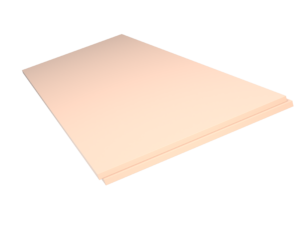
XPS 500 is a high performance rigid extruded polystyrene insulation board providing a durable thermal solution to technically demanding applications where high compressive loading is a requirement. XPS 500 is ideally suited for use in commercial, industrial and cold storage areas where vehicular traffic and loading is an issue.
"*" indicates required fields
| Product Details | |
|---|---|
| Product name | XPS 500 |
| Material code | Please refer to packing list |
| Type | High Performance Extruded Polystyrene Insulation |
| Thickness | 30mm, *40mm, 50mm, 60mm, 80mm, 100mm, 120mm |
| Inner facing | N/A |
| Outer facing | N/A |
| Thermal Conductivity | 0.033 – 0.035 (W/mk) |
| Compressive strength | CS (10\Y) 500 |
| Unit of measurement | mm |
| Size/Dimensions | 1250 x 600mm |
| Reaction to fire | Euroclass E |
| Installation guidelines | Please refer to marketing materials |
| Thickness (mm) | R-Value (m2K/W) |
|---|---|
| 30 | 0.90 |
| 40* | 1.20 |
| 50 | 1.50 |
| 60 | 1.80 |
| 80 | 2.25 |
| 100 | 2.85 |
| 120 | 3.40 |
High Performance rigid extruded polystryrene
Ideally suited for use in highly loaded and trafficked floors, basement walls and inverted roofs
Available in 300 kPA, 500 kPA and 700 kPA
XPS is an Extruded Polystyrene Insulation made by extruding polystyrene granules into rigid, closed-cell insulation boards.
It’s important to note that this should not be confused with EPS, which stands for expanded polystyrene. Although EPS is made from the same base material, the different manufacturing process means it can’t offer the same performance characteristics as XPS solutions.
At Unilin Insulation, we provide Extruded Polystyrene Insulation, known as XPS.
XPS insulation board offers extremely high compressive strength, meaning it is typically specified in high load-bearing applications, such as green roofs, ballasted roofs, rooftop car parks, parking garages, basements and flooring installations.
Combined with its compressive strength, this makes XPS the a durable solution for technically demanding applications or spaces prone to humidity, such as floors, cellars and foundation walls.

Extruded Polystyrene Insulation be used in many applications. Unilin provide XPS for floors, roofs and wall applications as it is ideally suited for use in highly loaded and trafficked floors, basement walls and inverted roofs.

A low lambda value(Thermal conductivity) results in a high R-value or thermal resistance, a measure by which we assess specific insulation products in relation to their insulation thickness. This thermal resistance quantifies the area and temperature difference needed to transfer 1W of heat energy. The higher the R-value, the lower the amount of heat loss.
The low lambda value of XPS means that anyone working with the product can insulate a building comfortably thanks to its thickness while optimising the energy performance. With XPS, you can make efficient use of the space available to you. Since you need less insulation material overall, this is the definition of a smart investment
A U-Value measures the rate of heat transfer through a building element, such as a roof, wall, window, door, or floor. In building physics, it represents the thermal transmittance of a construction assembly and is defined as the inverse of the total thermal resistance (R-value) of all layers within that element.
In simple terms, the U-Value indicates how much heat flows through a material or structure from a warm area to a colder area. It is a key metric used to evaluate the thermal performance and energy efficiency of building components.
Heat naturally moves from warmer spaces to cooler ones. The U-Value quantifies the amount of heat lost or gained through a building component per unit area for each degree of temperature difference across it.
W/m²K (watts per square metre kelvin)
This unit describes how many watts of heat pass through one square metre of a structure for every 1-degree temperature difference between the inside and outside environments.
Example of a U-Value: A wall panel with a U-Value of 0.15 W/m²K means that 0.15 watts of heat will transfer through each square metre of the wall for every 1°C difference between indoor and outdoor temperatures.
Factors That Affect U-Values
Several factors influence the U-Value of a building element, including:
Optimising these factors helps reduce heat loss and improve overall building performance.
Stay informed of the latest developments with the Unilin Insulation mailing list
"*" indicates required fields